The Quiet Logic of a Scenic Detour
A scenic detour should suit the day, not just the map. Learn how to weigh its pace, purpose, and effect on the rest of a western road trip.
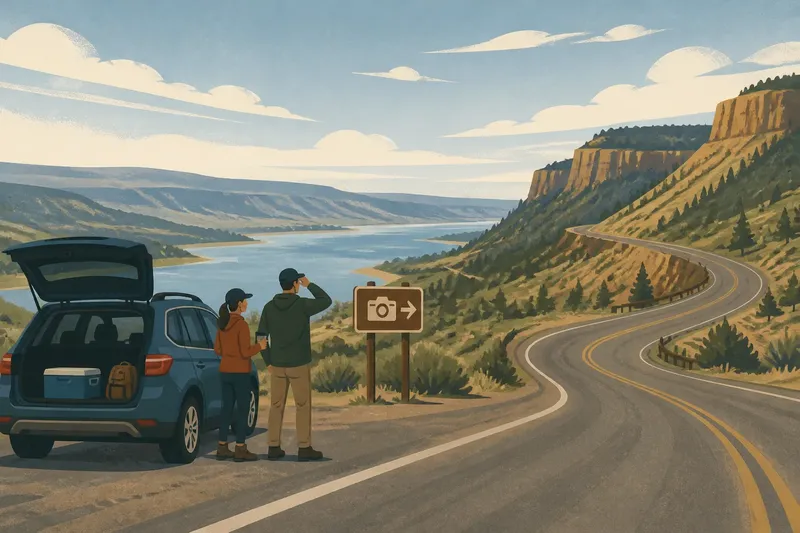
A scenic detour earns its place when the experience along the way matters more than reaching the next stop quickly. On a western road trip, that might mean leaving a direct highway for a canyon road, a lakeshore, or a stretch of open high desert. The right choice depends on the day’s shape: how much time and attention you have, what the detour offers, and what it displaces.
Start with the day
Before choosing a side road, name the day’s main purpose. Is it a transfer day between towns, a chance to linger outdoors, or a link between two planned activities? A detour that suits one kind of day can frustrate another. A winding route may be the point of a relaxed outing, but an unwelcome delay when you need to reach lodging before dark.
Think in terms of attention as well as time. A scenic road may ask for slower driving, frequent pullouts, and concentration through bends. A route can look short on a map yet feel demanding if it is narrow, exposed, or unfamiliar. If the driver will be tired, a calmer road and a simple arrival may be more valuable than another viewpoint.
Also identify what is already fixed. A timed entrance, a meal reservation, a ferry, or a meeting gives the day an anchor. Flexible stops can move around that anchor; a detour that makes the anchor stressful is probably a poor fit. If nothing is fixed, you have more room to let the road set the pace.
Match the route to your mood
If you want a destination: Choose a detour with a clear feature at the end, such as a named overlook or a short walk to a river. This suits travelers who enjoy having a reason to leave the main route and a natural point at which to turn back. Check whether reaching the feature requires more than a roadside stop, since a trail or access road can change the day’s demands.
If you want the drive itself: Favor a road whose character unfolds gradually: changing terrain, a sequence of viewpoints, or a shift from forest to open country. This works best when no one is counting down to the next appointment. Decide what would make the drive feel complete, such as one unhurried stop, rather than trying to collect every turnout.
If the group has mixed energy: Pick a route with easy ways to pause or return to the main road. A traveler who wants to stretch can take a short walk while someone else rests, and the group can skip later stops without losing the point of the outing. Avoid choosing a detour whose appeal depends on everyone completing a long, demanding activity.
If the day is already full: Keep the detour brief and close to the route you must take, or leave it for another day. This is not a failure to appreciate the landscape. A late arrival or a rushed meal can erase the pleasure of a view, while a small pullout may provide enough of a change of scene.
Judge its real cost
Map distance is only one part of a detour’s cost. Consider the road surface, curves, stops you expect to make, and how easily you can rejoin your route. A pass road may be compelling but slower than its distance suggests; a short spur may still require a deliberate turnaround. Read current road notices and check the route on a map before committing, especially where seasonal closures or limited services could affect the plan.
Then ask what the detour replaces. It may cost a museum visit, a proper lunch, or time to settle into camp. Put the options side by side: which one gives the group the experience it wants today? The answer can change with weather, fatigue, or a later departure. Flexibility is useful only if you preserve something worth doing with the time you save.
Say you are driving from a town in eastern Oregon toward a reserved room near the Columbia River, and you spot a signed viewpoint route. If the morning began early and the room is not tied to a fixed arrival, you might take the spur, stop once, and return to the main road before the afternoon feels compressed. If clouds hide the view or the driver is weary, continuing toward the river may be the better version of the day. The route has value only if its actual conditions still fit the reason for taking it.
Questions before turning?
How do I tell if a detour is worth it?
State what you hope to experience and what you will give up to get it. If the answer is specific and the trade-off feels acceptable, the detour has a sensible purpose.
Should I take a scenic road in bad weather?
Weather can change visibility, road conditions, and how comfortable a stop feels. If the route’s appeal depends on a view or safe roadside access, check current conditions and be ready to stay on the main road.
What if the group cannot agree?
Offer a low-commitment version, such as one viewpoint with a clear return point. If that still does not suit the group, keep the planned route and choose a stop everyone can enjoy.
How much planning does a detour need?
Check where it begins and ends, what kind of road it uses, and whether you can leave it early. You do not need to script every stop; knowing the exit options is often enough.
Keep the choice light
A scenic detour does not need to become a separate expedition. Choose one reason to take it, notice how the day is going, and let the route’s actual conditions guide the rest. It is not worth laboring over a perfect sequence of overlooks or trying to justify every mile on a map. A single good stop can be enough.
For a scenic detour, the most useful question is not whether the road is famous or picturesque. Ask whether it suits this group, on this day, with the time and energy available. If it does, turn off with a clear point of return; if it does not, save the idea for a day when the drive itself can be the destination.