Choosing a Motel, Campground, or Spare Room on a Road Trip
Choose road trip lodging that fits your arrival time, sleep needs, and route, with clear checks for motels, campgrounds, and spare rooms before booking.
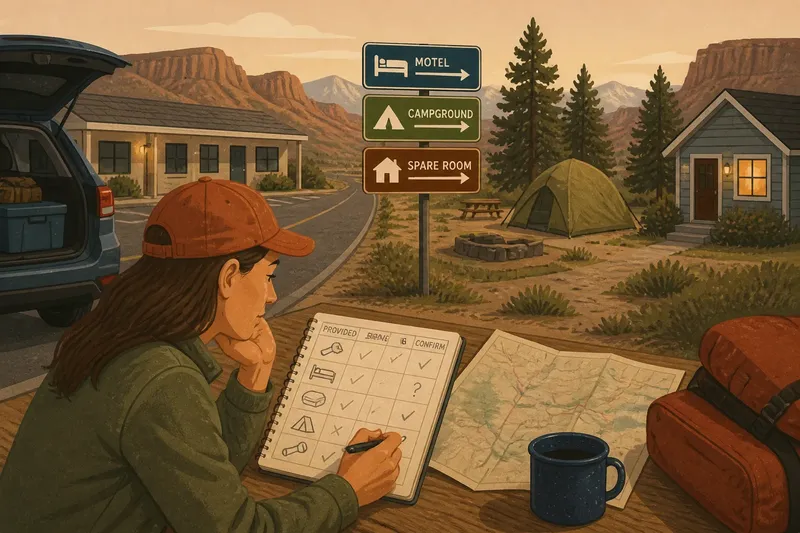
Road trip lodging works best when its arrival rules and sleeping setup match the day’s drive. A motel, campground, or spare room can each be a sensible stop across the western United States, but a closed gate or an unclear key handoff can make a late arrival difficult.
Compare the actual requirements, not just the listing or nightly rate. A motel usually asks little setup of you; a campground depends on the site’s facilities and your sleeping arrangements; a spare room depends on the host’s home and schedule.
Arrival and access
Driving time can shift with traffic, weather, meals, or a slow road. Check how each place handles a delayed arrival before you commit. A motel may have a late check-in procedure, a campground may have a gate or quiet-hour rule, and a spare-room host may need to be present to let you in.
Ask specific questions: Can you collect a motel key after the desk closes? Is the campground entrance open late, and where should you park? Can a spare-room host leave instructions if your arrival changes? Keep the address and entry details available offline for stretches with weak service.
For each option, compare your likely arrival window with its stated access rules. If the window overlaps a cutoff, choose a place with later access or contact the property to agree on a workable arrangement. Do not assume a general check-in time covers a delayed arrival.
Sleep and privacy
Decide what you need to sleep well before comparing amenities. A motel may offer a private bathroom, but confirm the room details and consider possible road or hallway noise. A campground may have shared facilities and exposure to wind or cold. A spare room may involve a shared bathroom or household routines that shape your evening.
Ask about the details that affect your rest: bathroom access, nearby noise, bedding, parking, and any quiet hours. For a campground, check the site’s facilities and consider whether your shelter and sleeping setup suit the expected conditions. For a spare room, clarify which spaces are private and what time the household usually settles in.
It is not worth the effort to pack multiple bulky comfort items without knowing what is missing. First confirm what the lodging supplies; then address the specific gap that could make the night uncomfortable.
Supplies and setup
Make a short “provided, bring, confirm” note for each reservation. List what the property says it supplies, what you need to carry, and what remains unclear. A campground may require you to bring shelter and bedding; a motel may need only your personal essentials; a spare room’s linens and towels depend on the host.
Use each unresolved item to make a decision: if a necessary item is not supplied, bring it or choose another stay; if it is unclear, ask before booking; if it is supplied, leave the duplicate at home. This keeps your lodging choice tied to what you will actually have at bedtime.
Changes and full cost
Read the cancellation and change terms before treating a booking as flexible. A motel reservation may have a deadline for changes, a campground may be tied to a particular site or arrival window, and a spare-room plan may depend on the host’s availability. If your route is uncertain, ask what notice is needed and whether a change is possible.
Compare more than the listed charge. Include required fees, any gear you would need to obtain, distance from your route, and the time needed to set up or pack away. A lower charge may not suit you if it requires a long detour or gear you do not have.
Say you are planning to drive from a desert town toward a campground, and your arrival could slip past its gate time. You check the campground’s entry rules and find that late entry is not allowed; you also confirm that a motel near the highway accepts late arrivals. You choose the motel for that night and keep the campground reservation for a day when your timing fits. The decision trades a night outdoors for reliable access and avoids arriving at a closed gate.
Which lodging fits your route?
When does a motel suit a road trip?
A motel suits a stop when you need a private room, a simple arrival, or a break from carrying and setting up camping supplies. Confirm check-in, parking, and the particular amenities you need rather than assuming they are included.
When is a campground a good fit?
A campground can work well when its access rules, facilities, and conditions match your plan. Check what the site provides and what you must bring before choosing a remote or late-arrival stop.
What should you ask about a spare room?
Ask what is private or shared, whether bedding and towels are supplied, how you will enter, and where you may park. Agree on an arrival window and clarify any household routine that affects your stay.
Can you mix lodging types during one trip?
Yes. Choose each night according to that day’s arrival time, sleep needs, and route rather than following one lodging style throughout. A campground may suit one stop, while a motel or spare room may fit a later arrival or a need for simpler setup.
Road trip lodging checks
Use these checks to compare actual options. Each result points to a practical choice rather than relying on a listing’s general description.
- Check your likely arrival window against the motel’s check-in process; if late entry is available, keep it as an option, but if access ends earlier, ask for an arrangement or choose another stop.
- Check the campground’s gate and quiet-hour rules; if your arrival fits, keep the site in consideration, but if it falls outside the rules, choose a later-access stay or change the route.
- Check whether the spare room has a private or shared bathroom; if the arrangement suits your needs, proceed with the booking, but if it does not, choose a room with the privacy you require.
- Check which bedding and towels each stay supplies; if a necessary item is missing, bring it or choose another place, but if the listing is unclear, ask before booking.
- Check the campground’s facilities and your own shelter and sleeping setup; if they match the site and expected conditions, consider camping, but if a critical item or facility is missing, choose a different stay.
- Check each reservation’s change terms; if they fit the uncertainty in your route, book accordingly, but if they do not, ask about alternatives or choose a more suitable reservation.
- Check for required fees, detours, and setup demands; if the complete stop fits your plan, keep it, but if it adds an unwanted burden, compare another location or lodging type.
For a final comparison, decide in this order: access, sleep conditions, supplies, and then full cost and change terms. That keeps an attractive rate from distracting you from an entry cutoff or an essential item you would need to carry.
Road trip lodging is a practical part of route planning, not a fixed style you have to follow for every night. Save the chosen place’s address, access instructions, and change terms offline; then check that the next morning’s departure works with the route ahead.