Why Packing for Every Possibility Can Backfire
Packing for every possibility can crowd a western road-trip bag. Build a useful list around real outings, route conditions, personal essentials, and flexible layers.
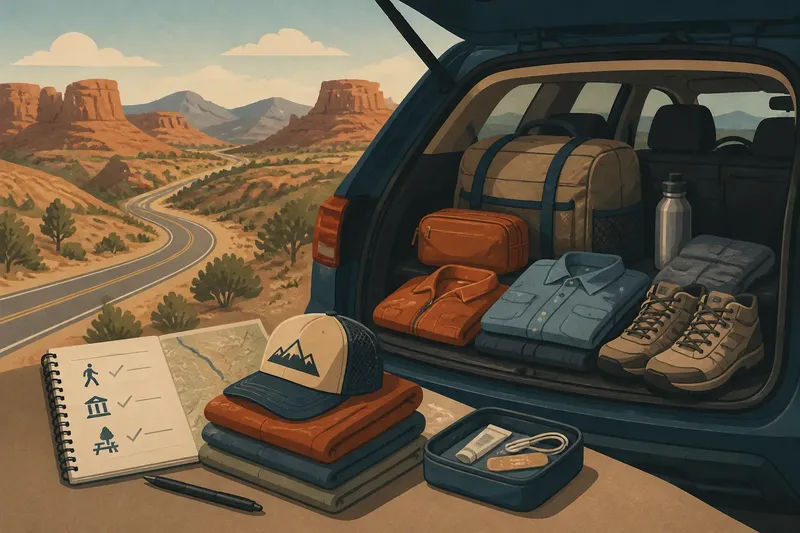
Packing for every possibility can crowd a western road-trip bag before the drive begins. A list tied to real outings and route conditions keeps the load useful without turning every imagined detour into another item.
That distinction matters on a route where a town walk, a dusty trail, and a cool evening may all fit into one day. The goal is to prepare for the plans you have, leave room for ordinary changes, and avoid packing gear for activities that remain vague.
Plan around real outings
Write down the activities you expect to do, rather than assigning a fresh outfit to every day. “Walk around Santa Fe,” “visit a museum,” and “picnic by a lake” each point to different needs. They may call for comfortable shoes, sun protection, or a small day bag.
Check whether an item serves more than one planned use. A breathable shirt might work for a town walk and a casual dinner; a fleece could suit a cool morning drive and an evening outdoors. But do not force an item into a role it cannot handle. Shoes that suit a rocky trail may be uncomfortable for hours on pavement.
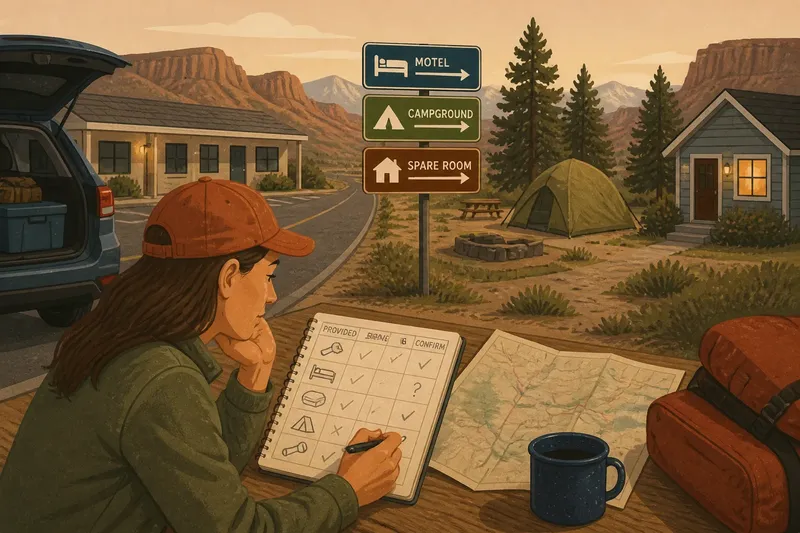
Separate confirmed plans from loose possibilities. A booked horseback ride may come with clothing guidance to check. A vague thought about stopping at a roadside attraction usually does not require special gear. For an activity that remains uncertain, ask whether the needed item is easy to obtain or carry later, rather than packing a full set of equipment now.
Sort items by purpose
Group your list by what each item does. This makes duplicates easier to spot and helps distinguish useful backups from clutter.
- Daily basics: List the underwear, socks, sleepwear, and everyday clothing you expect to use. If two items fill the same role, choose the one that works with more of your planned outfits; otherwise, keep the distinct item.
- Activity gear: Check each planned outing for required footwear or clothing. If an item is needed for a confirmed activity, pack it; if the activity is only a vague possibility, check whether a simpler alternative will do.
- Weather layers: Compare the forecast for the places and elevations on your route with the layers you already plan to bring. If they suit the expected conditions, avoid adding duplicates; if not, revise the layer choice or reconsider the outing.
- Personal essentials: Check medications, glasses, chargers, and toiletries you rely on. If an item is necessary and difficult to replace, give it a deliberate place; if it is a replaceable convenience, decide whether carrying it is worthwhile.
- Small backups: Check whether each backup addresses a plausible problem, such as wet socks after a walk. If an item has a clear use and is easy to carry, keep it; if another packed item already covers the need, leave the duplicate behind.
- Bags and containers: Check whether one day bag can hold the items for several outings. If it can, use one bag; if it cannot carry a specific outing’s essentials safely or comfortably, choose a suitable alternative for that outing.
Keep the list concrete. “Extra clothes” is hard to evaluate; “one spare shirt for a dusty drive day” has a clear purpose. If no specific activity or likely condition calls for an item, it may not need a place in the car.
Use route-aware layers
A forecast for one stop may not describe the whole drive. A mountain morning can feel different from an afternoon in a low-desert town, so check conditions for the actual places and elevations on your itinerary.
Think in layers rather than separate outfits for every possible shift. A comfortable base shirt, a fleece or sweater, and a shell can offer options when the forecast and activities call for them. The right combination depends on season, fabric, exposure, and what you plan to do; it is not a universal formula.
Check the forecast close to departure. If it points to conditions your planned layers cannot handle, change the clothing choice or adjust the outing. A distant peak that is not part of your route is not, by itself, a reason to pack specialized cold-weather gear.
Set a limit on backups
A backup earns space when it addresses a plausible problem that the rest of your bag does not cover. A spare pair of socks may help after a wet walk. A second bulky coat may add clutter if the layers already on your list suit the route.
Say you have a city hotel, a lakeside picnic, and a casual dinner on your itinerary. Your list includes walking shoes, a light layer, and a day bag, but you are considering a second pair of shoes for an unplanned formal event. Since no formal occasion is scheduled and the dinner is casual, leave the extra pair out; the result is space for the items tied to the actual day. If the dinner plan later changes, reconsider the shoes then rather than packing for it now.
It is not worth building a separate outfit around every restaurant, roadside stop, or hypothetical change of plan. For a replaceable basic item, nearby shops may be a reasonable fallback. Keep personal essentials, such as medication or prescription eyewear, separate from conveniences that can be replaced.
What should you pack?
How many outfits should I bring?
Base the choice on the trip’s length, laundry access, and planned activities rather than packing a distinct outfit for every day. Choose pieces that work in more than one combination, while keeping enough clean basics for stretches when laundry is impractical.
Should I prepare for changing weather?
Check conditions for the places and elevations on your route, then choose layers for those conditions and activities. If the route includes a substantial change in exposure or elevation, account for that specific difference rather than packing for every climate in the region.
What if I forget something?
Decide whether the missing item is a replaceable convenience or a personal essential. A basic toiletry may be available on the road, while medication, required documents, and prescription eyewear deserve a deliberate place before departure.
Do I need a just-in-case pouch?
A small pouch can keep a few useful items together, such as bandages or a charging cable. If it starts collecting objects with no clear purpose on the route, remove them.
Keep the final bag usable
Lay out the items on your list and check each against a planned activity, a personal need, or a likely route condition. Remove duplicates, then make sure the remaining gear fits and can be reached without unloading the whole car.
Packing for every possibility is less useful than carrying items chosen for the trip you are actually taking. Keep the list flexible, but make each addition answer a concrete need; that leaves room for the road without asking your luggage to anticipate every turn.