A Small-Town Afternoon with No Fixed Schedule
A small-town afternoon with no fixed schedule starts with one anchor stop, then leaves room for nearby discoveries, an unhurried meal, and an easy return.
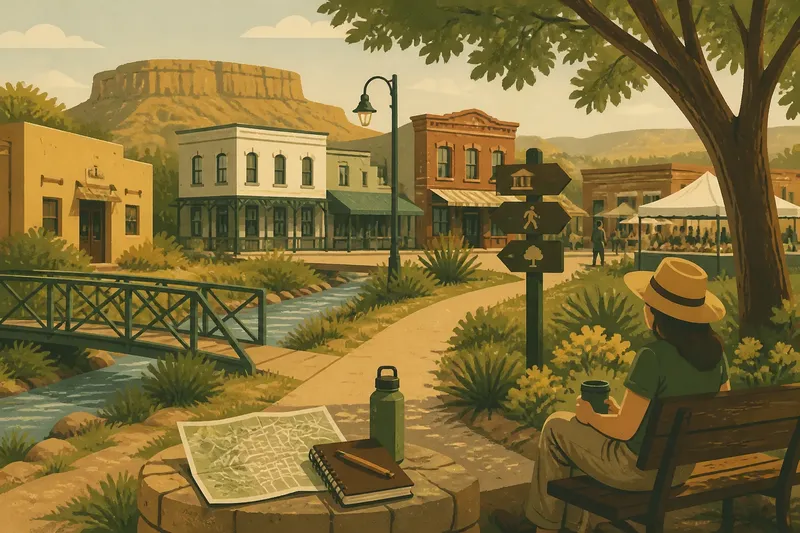
A small-town afternoon with no fixed schedule works best when you choose one place worth reaching and leave the rest open. In a western town, that anchor might be a local museum, a riverside path, a historic main street, or a public market. Give it the attention it deserves, then use nearby streets and public spaces to decide what comes next.
This is not the same as arriving with no plan at all. A little preparation helps you find the anchor, understand how the town is laid out, and avoid spending the afternoon backtracking. The aim is to keep decisions light once you arrive, while preserving enough structure to make the outing feel complete.
Choose One Anchor
An anchor stop gives the afternoon a center of gravity. It should be something you would still visit if you had no time for anything else. In a small town, that could be a county museum, a shaded town square, a public garden, a bookstore with local maps, or a short, accessible stretch of trail.
Choose for fit, not for prestige. If you are arriving after a long drive, a quiet park may suit you better than a museum with dense exhibits. If the weather is hot, look for shade or an indoor stop. If you want to understand the town’s character, a small museum or a locally run cultural center may offer useful context before you wander.
Check the anchor’s current opening information before setting out. Small venues may keep limited hours, close for a local event, or operate seasonally. If the place is closed, select a nearby backup that serves the same purpose: a public mural walk instead of a museum, for instance, or a riverside path in place of a garden.
Keep the anchor modest in scope. A sprawling attraction can quietly turn an easy afternoon into a race to fit in every room or overlook. Choose one main feature to notice, such as the building’s architecture, the local landscape, or the objects that explain how the town developed. Let that be enough.
Set a Loose Frame
Before leaving your lodging or parking area, decide on a broad beginning and ending. You might arrive after lunch, visit the anchor while you still have energy, then spend the later part of the afternoon close to the town center. Pick a point at which you will start heading back, but do not assign every stop a time.
A loose frame is useful because small-town businesses do not always keep the same hours as attractions in larger cities. A café may close between lunch and dinner; a shop may shut early on a quiet weekday. If one place is unavailable, the afternoon can keep moving without a scramble. The anchor stays fixed, while the optional stops remain interchangeable.
Take a few minutes to look at a town map before you set off. Mark the anchor, a public restroom if one is available, a place to get water, and the area where you can sit in shade. A printed visitor map or a saved map on your phone can do the job. You do not need to plot a precise route; just notice which streets or paths connect the places you may want to visit.
Also settle the practical details that can interrupt a relaxed outing. Know where you parked, keep the vehicle keys in a consistent pocket, and carry water appropriate to the day. If you have a mobility concern, check accessible entrances and surfaces in advance rather than assuming that a historic sidewalk or trail will be easy to use.
Let Nearby Finds Lead
After the anchor, choose the next stop based on what is actually around you. A hand-painted sign might point toward a community gallery. A shaded bench may make a better pause than another attraction. A public notice board might list a market, an exhibit, or a local event taking place that day.
Favor discoveries that are close enough to keep the outing coherent. Walking a few blocks from the anchor can reveal storefronts, public art, a library, or a small park without requiring a new drive and another parking search. If the next interesting place is farther away, decide whether the extra trip fits the afternoon rather than treating it as an obligation.
Ask a simple, specific question if you speak with someone who works nearby: “Is there a public place to sit in the shade?” or “Which street is pleasant to walk from here?” This invites practical guidance without asking a stranger to design your day. A visitor center, library desk, or shop counter can also point out public spaces and current closures.
Say you arrive in a fictional high-desert town with a local history museum as your anchor. After visiting, you notice a small gallery across the square and a shaded path beside a creek. You choose the gallery because it is open, walk the creek path when the afternoon warms, and return toward the center for a drink; the observable result is a connected outing with time to sit, not a string of drives between attractions.
What is not worth the effort is chasing every “must-see” pin you saved before the trip. A long list can turn a town into a scavenger hunt and make you overlook the ordinary details that give a place its feel. Keep one or two alternatives in mind, not a second itinerary.
Make Room for a Pause
A pause is part of the plan, not evidence that you have run out of ideas. Choose a café, a public bench, a picnic table, or a patch of shade where you can rest without needing to order or buy something. In a warm western afternoon, a break out of direct sun can matter more than one extra stop.
Food can be an anchor of its own if that is what you want from the outing. Look for a local bakery, a diner, or a market counter, but let the timing stay flexible. If the kitchen is closed or the wait is long, a grocery store or café may offer a simple alternative. Keep any dietary needs in mind when choosing, and bring a snack if options in a small town may be limited.
Use the pause to notice what you have already seen. Perhaps the town’s main street has porches and older storefronts, or the surrounding hills make the streets feel unusually open. These observations can help you choose what to do next: stay in the center, walk toward a public green space, or call the afternoon complete.
When Plans Shift?
What if the anchor is closed?
Use the backup you chose for the same kind of afternoon, such as a public garden, a walking route, or a cultural display in a library. If there is no suitable substitute nearby, make the town square or main street your anchor and explore at an easy pace.
How much should I plan?
Choose one anchor, check its hours, and identify a nearby place to rest or get water. Keep the remaining stops optional; that is enough structure to avoid aimless driving without turning the afternoon into a timetable.
What if the weather changes?
Move toward an indoor public place, such as a museum, library, covered market, or café, if conditions make walking uncomfortable. In strong heat, wind, smoke, or sudden rain, shorten the outing rather than trying to preserve the original route.
Can I do this without a car?
Yes, if you choose an anchor near the center or close to a reliable transit stop. Check the return option before setting out, then keep discoveries within a walkable area so you are not left depending on an unavailable ride.
End Without Rushing
As the afternoon begins to wind down, look at the distance back to your vehicle, lodging, or transit stop. Leave enough room to return at a comfortable pace, especially if you are walking on uneven sidewalks or unfamiliar roads. If the town is spread out, arrange the return ride before you need it.
Before leaving, take a moment to check that you have your belongings and that any public space you used is left as you found it. You can also make a quick note of a shop, trail, or café you would like to revisit. That note is more useful than trying to remember every place you passed.
A small-town afternoon with no fixed schedule is easiest to repeat when the anchor is clear and the rest remains optional. For the next town, choose a place that matches your energy, keep nearby discoveries within reach, and let the afternoon end when you feel ready to move on. If local conditions, access rules, or opening details matter, confirm them with the relevant venue or local authority before relying on them.